 (512) 277-9435
 sales@progreenlandscapesolutions.com

Has your sprinkler system been running as usual, even though November nights are getting colder? In Central Texas, a warm afternoon can make freezing weather seem far away, but one cold front can change that overnight. Water trapped inside certain sprinkler parts can freeze, expand, and crack a valve or fitting that worked perfectly the day before. This blog explains what homeowners should check now so they are not dealing with a damaged system later.
Why Irrigation Needs A Closer Look Before November’s First Freeze
How Local Weather Changes the Freeze Timeline
In early November, lawns can still look green enough to need watering, especially after a dry stretch. That is what makes the first freeze easy to forget. In Austin, TX, a sunny afternoon may feel pleasant while the forecast calls for temperatures near 32°F before sunrise. Those colder hours matter more than how comfortable the weather felt earlier in the day. Homeowners should watch the overnight low and how long temperatures are expected to stay below freezing, rather than relying on a specific date. One irrigation schedule that worked in October might need to stop entirely when colder nights arrive.
A brief freeze does not always damage an underground sprinkler line, but exposed pieces face a different risk. Water in a pipe fitting or backflow assembly can expand when it freezes, even when the lawn looks fine. In Round Rock, TX, a homeowner may have sprinklers tucked into the grass and a separate valve box near the curb. Both deserve a look before a strong cold front arrives. Good irrigation planning starts with knowing where the water enters the system and which parts could be exposed to cold air. This helps avoid the surprise of discovering damaged plastic after the weather warms.
Why A Backflow Preventer Needs Extra Care Now
The backflow preventer is one of the most important parts to find before temperatures fall. It keeps water from the sprinkler system from flowing back into the drinking water supply, making it more than just another valve. Some homes have equipment above ground, while others have backflow parts in a box near the meter. The location and type affect how the assembly should be protected and drained. A useful irrigation winterization check includes identifying this equipment before anyone starts turning handles without knowing what they control. It is worth checking its condition while there is still time to ask questions.
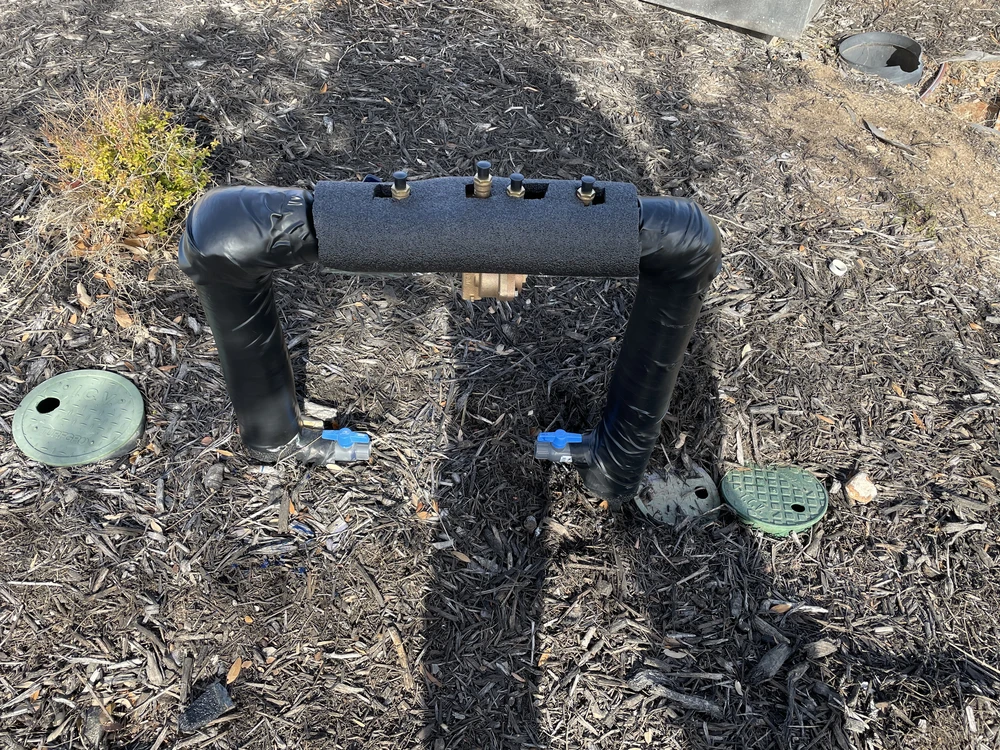
A homeowner may see copper or brass fittings above the soil and assume an old towel will be enough. Insulation can help protect exposed piping, but it does not replace removing trapped water from parts that need to be drained. In Austin, TX, even a short cold snap can affect equipment left uncovered beside a house or garden bed. Covers should fit the equipment properly and should not block required openings or interfere with its operation. If the assembly is unfamiliar, an experienced irrigator can explain the safest way to protect it. Foam pipe sleeves are useful around straight exposed sections, but they must be suitable for outdoor conditions.
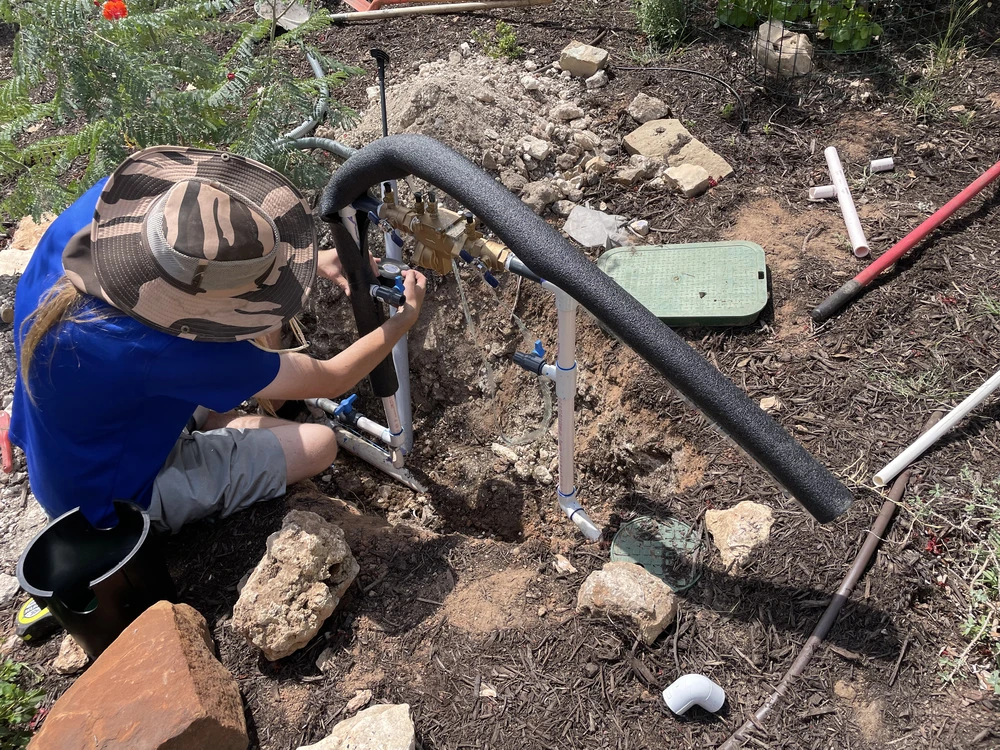
How Irrigation Winterization Protects Sprinkler Piping And Valves
How To Find The Sprinkler Water Shutoff Valve
The first useful move is to stop the sprinkler controller from starting another watering cycle during freezing weather. Many digital timers have a rain or off setting that keeps the saved schedule, although owners should check their particular model. Next is the separate water supply valve for the sprinkler system, often near the meter or backflow assembly. Don’t confuse it with the shutoff for the entire house. Proper irrigation winterization depends on identifying the right valve before water is isolated. A screen that says “off” is not the same as physically isolating the water supply.
If the valve box is full of leaves or soil, it may take a little cleaning just to see what is inside. However, a stuck handle should never be forced because an older fitting can break while someone is trying to protect it. In Round Rock, TX, some residential backflow devices are kept in separate boxes near the curb, so the location may not be obvious from the controller. Homeowners who cannot identify their sprinkler supply valve can have a professional locate it and explain its purpose. This makes later irrigation care easier when another cold front comes through. A clear photo of the shutoff location can also help the household find it again.
Ways To Drain Exposed Pipes And Valves Safely
Turning off the water supply is important, but any water already trapped in exposed components may still freeze. Texas winterization advice also calls for draining above-ground parts, especially backflow prevention assemblies that can hold water inside the body. The exact procedure depends on the assembly and the valves connected to it. Some systems have drain points, while others require a different sequence to avoid trapping water in a chamber. That is why irrigation winterization should follow the equipment’s instructions rather than a video showing a completely different setup.
For a stronger freeze, some systems can release remaining water by briefly operating the sprinkler zones after the water supply has been shut off. However, that method doesn’t guarantee every part is empty, especially if a valve or sprinkler head holds water. Compressed-air blowouts are common in colder northern climates, but most Texas sprinkler systems are not designed for that approach. Using a compressor without the right training can damage components instead of protecting them. A professional can determine the right drainage, especially if the system has unfamiliar backflow equipment. A good irrigation winterization visit also checks whether drip filters or other exposed fittings are holding water.
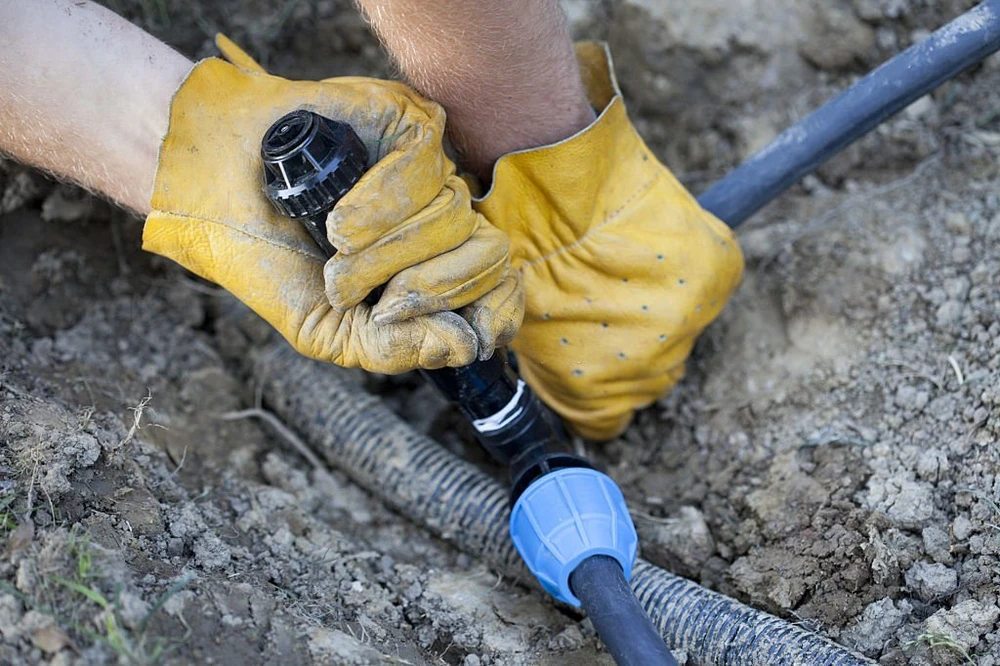
When Irrigation Repair Is Worth Scheduling Before the Freeze Hits
Why Small Sprinkler Leaks Matter Before Frost
A sprinkler system with a small leak already has a problem, even if the grass still looks healthy. One clue may be an unusually wet patch beside a sprinkler head when the rest of the lawn is dry. Another is water seeping around a valve box after the scheduled watering has ended. These signs deserve attention before freezing weather makes it harder to see where water is coming from. Early irrigation repair can address a damaged fitting or valve before cold weather adds another problem. Water escaping near a paved walkway may also make the surface slippery during a cold morning.
Homeowners sometimes postpone sprinkler repair because the affected zone still turns on and waters most of the yard. However, an exposed crack or loose connection is unlikely to improve as temperatures drop. A professional can check whether the problem is limited to a sprinkler head or involves piping and valves below the surface. This keeps irrigation repairs focused on what needs work instead of replacing parts that are still in good condition. It is also easier to plan costs before an unexpected leak becomes an urgent job.
When Licensed Help Matters More Than DIY Work
There is a difference between switching a controller off and opening a backflow device without knowing how it works. Those assemblies protect the water supply, and their test ports and internal parts require the right knowledge and procedures. An irrigator can identify the assembly, check exposed connections, and recommend insulation or drainage based on the actual equipment. If an older valve is already leaking or hard to turn, irrigation repair may be needed before the winter shutdown can be completed safely. Good materials matter here because a proper replacement fitting should withstand normal water pressure and outdoor conditions.
After the cold weather moves on, homeowners should not restart a system while exposed parts are still frozen. Once the equipment has thawed, the water can be restored carefully, and the zones checked for spraying in the wrong place, pooling water, or visible leaks. This is another time when sprinkler repair may be necessary, especially if a cracked fitting only becomes obvious after pressure returns. A careful inspection can separate a simple adjustment from irrigation repair that needs replacement parts. Choosing practical repairs and durable components can save money over time without paying for work the system doesn’t need.
Conclusion
The first freeze does not have to leave homeowners guessing about their sprinkler systems. Checking the forecast, finding the water shutoff, protecting exposed equipment, and arranging drainage when needed can help prevent avoidable damage. At Pro Green Landscape Solutions, we understand how Central Texas weather can change and why every property’s sprinkler setup deserves its own approach. We focus on dependable materials, practical local advice, and competitively priced work that fits the problem. If a valve is leaking or the system needs help preparing for colder nights, contact us, and we will be happy to help.

