 (214) 300-9564
 sales@progreenlandscapesolutions.com

In Dallas, TX, spring watering can get off track fast because one warm week makes the yard look ready for summer, even when the season is not there yet. March in the Dallas-Fort Worth area usually sits in that in-between space where warm-season grass is waking up, spring rain is still part of the pattern, and water rules already matter before the hottest months arrive. Read on, and it becomes much easier to see what a spring irrigation plan should actually look like for a North Texas yard.
Establishing a Baseline for Spring Irrigation Needs
Landscaping Should Read The Soil First
A smart irrigation plan does not begin with the controller. It begins with the yard itself. In March, a homeowner may see green returning to parts of the lawn and assume the whole property needs a full watering schedule right away, but that can be misleading. The Dallas-Fort Worth climate has wetter spring and fall periods than summer, and the growing season is tied more closely to those rainier stretches than to the first warm afternoon of the year.
A good first check is simple. The soil should be looked at in sunny spots, shaded areas, slopes, and sections near walks or driveways, because North Texas yards rarely dry out evenly. Some sections may still hold enough moisture from recent rain or cooler weather, while other sections begin drying sooner because of sun exposure, reflected heat, or thinner turf cover. That difference matters for landscaping because a single schedule applied across the entire property can leave one area soggy and another one thirsty.
Irrigation System Repair Comes Before Run Time
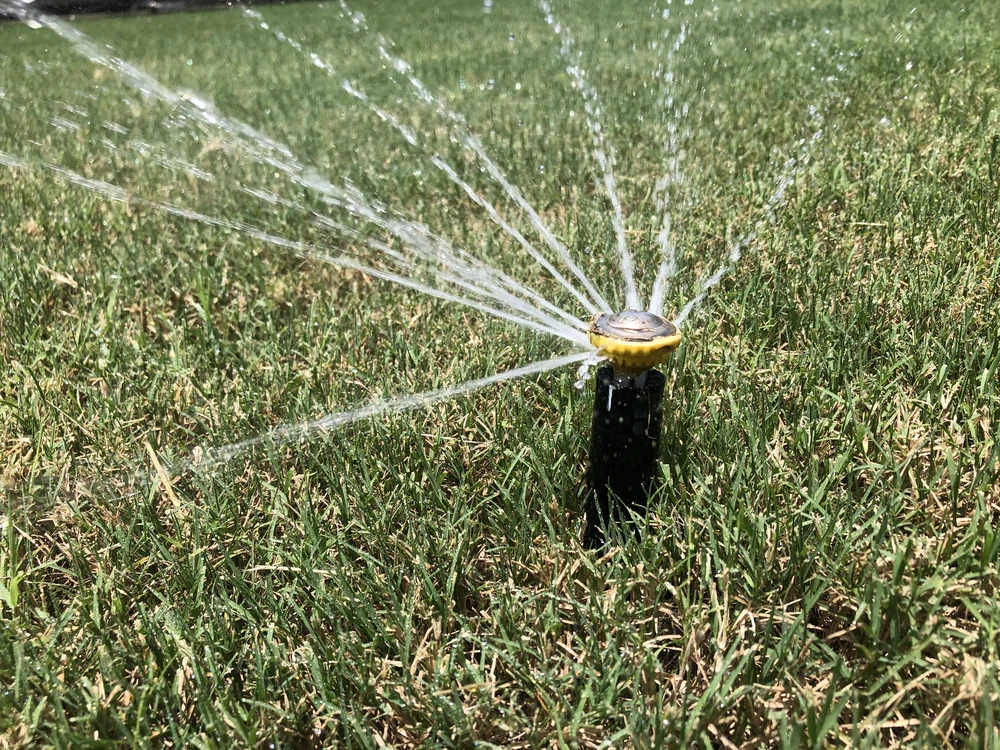
Before a system gets more run time, it needs a close look. Dallas rules require property owners to maintain their sprinkler systems, repair broken, missing, or misdirected heads, avoid watering during precipitation, and keep runoff off streets and other drainage areas. Automatic systems in Dallas also require rain and freeze sensors, which makes sense in a climate where spring weather can shift quickly from a cool spell to a warm stretch and back again. If irrigation winterization was done well, that spring check usually goes more smoothly.
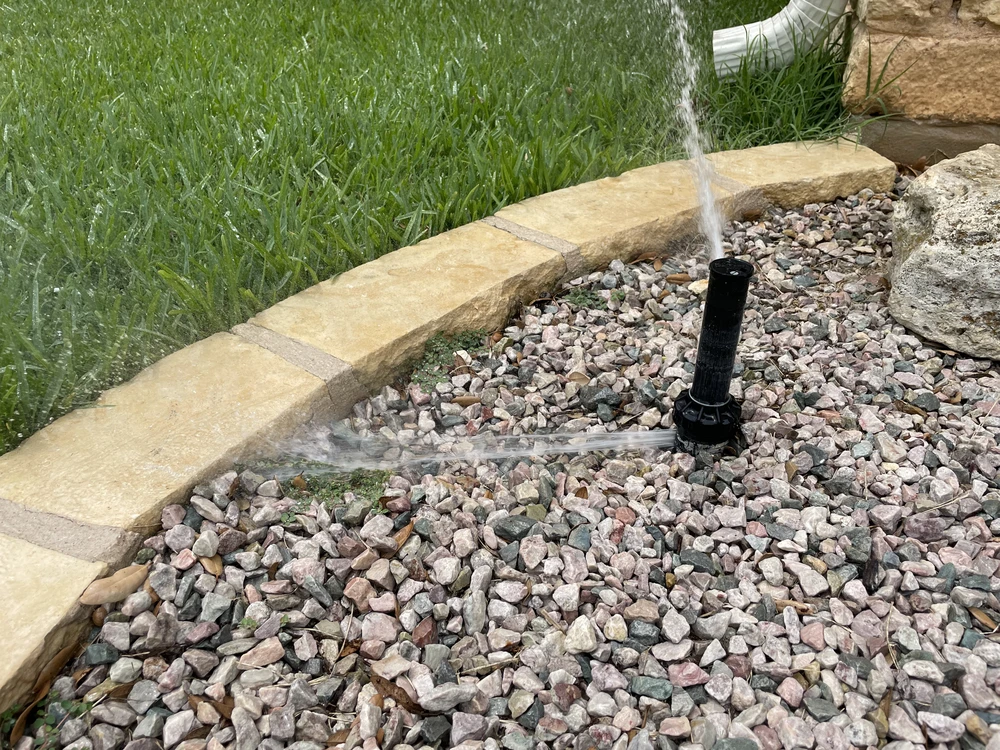
This is where irrigation system repair becomes part of water savings, not just appearance. A head spraying the sidewalk, a valve that sticks open, or a low spot that puddles after a cycle is not a small issue in spring. It means the plan is already wasting water before the season really gets going. In a service area that reaches beyond Dallas, the same kind of early check helps properties in Fort Worth, TX, too, especially since local rules there also prohibit runoff, watering during precipitation, and watering with broken or misaligned heads.
Navigating Local Irrigation Rules and Water Schedules
Landscaping Should Follow City Water Rules
A smart spring irrigation plan should treat city watering rules as the ceiling, not the target. Dallas limits lawn and landscape watering with sprinklers to a maximum of twice per week based on the address, and from April 1 through October 31, there is no sprinkler watering between 10 a.m. and 6 p.m. That means a homeowner in Dallas, TX, may be allowed to water twice, but the yard does not automatically need to be watered on both days every single week in spring.
That distinction matters because March and early spring are not the same as July in North Texas. Warm-season turf should have irrigation turned off or significantly reduced from late fall into early spring, since cooler temperatures, reduced growth, and natural rainfall often meet much of the plant’s needs. Too much irrigation in spring and fall can contribute to turf diseases such as large patch and take-all patch. Smart landscaping pays attention to that and starts on the light side, then adjusts upward only when the yard shows a real need.
Irrigation System Repair Stops Waste Early
A spring plan also needs to account for how water moves through a North Texas yard. Watering frequency depends on factors such as soil type, rooting depth, slope, and location, which means one property can behave very differently from the next. A flat backyard with dense turf does not respond the same way as a sloped front lawn with bare spots and hard soil. That is why irrigation system repair and seasonal adjustment belong together. One fixes the hardware, and the other makes sure the repaired system is not still applying water incorrectly.
Irrigation audits are important too. The catch-can test can help measure water application. Just leave a can in place while the system runs through different parts of the lawn and measure how much water is delivered. For example, a system delivering 0.33 inches in 20 minutes needs three 20-minute cycles weekly to apply about 1 inch. That kind of measuring matters because most homeowners are surprised by how uneven coverage can be from one zone to another.
Irrigation Plans Need Changes As Spring Keeps Moving
Landscaping Should Respond To Rain And Growth
Once the system is working properly, the next job is paying attention to what the lawn is showing. Drought stress in turf often shows up as wilting leaves and a blue-gray cast across the lawn, and those are much better signals than watering just because the calendar says it has been a few days. In other words, a smart irrigation plan looks for need instead of watering out of worry. That makes a big difference in spring landscaping, because the lawn is still moving through early growth and the weather may still hand the property helpful rainfall before the real heat settles in.
This is also where watering depth matters more than simply turning zones on more often. A smart spring plan should aim to provide enough water to help roots move downward, rather than keeping only the surface damp. Good landscaping does not get stronger from short, nervous watering cycles every other day. It gets better when the plan matches the soil, the weather, and the condition of the grass in front of the homeowner.
Irrigation System Repair Still Matters After Winter
Spring also has a way of revealing what winter left behind. A system that seemed fine last fall may open the season with a cracked fitting, a clogged head, a stuck zone, or a sensor issue that was easy to miss when the controller was barely running. That is one reason irrigation winterization still matters in a place like North Texas, even if winters are milder than they are farther north. When irrigation winterization is skipped, rushed, or only partly handled, the result often shows up later as irrigation system repair instead of a smooth spring startup.
The best spring plan is usually less dramatic than people expect. It starts with checking coverage, repairing obvious trouble spots, confirming sensors, and setting conservative run times that can be adjusted after real rainfall or warmer weather changes the yard’s demand. It also keeps landscaping beds separate from turf needs whenever possible, because ornamentals, foundation areas, and lawn zones do not always need the same amount of water at the same time. By the time late spring moves closer to summer, a property that has been handled this way is in a much better position than one that simply had the controller turned up and forgotten.
Conclusion
A smart spring watering plan is not about using every allowed day or making the yard look finished in one week. It is about starting small, checking how the lawn and beds are actually responding, and making sure the system is working correctly before any extra water ever reaches the ground. We at Pro Green Landscape Solutions believe irrigation should be handled by local experts, delivered with careful service, and powered by advanced water-saving technology that protects both the property and the water bill. If a spring system check or seasonal adjustment is overdue, contact us, and let’s get your yard ready for the months ahead.


